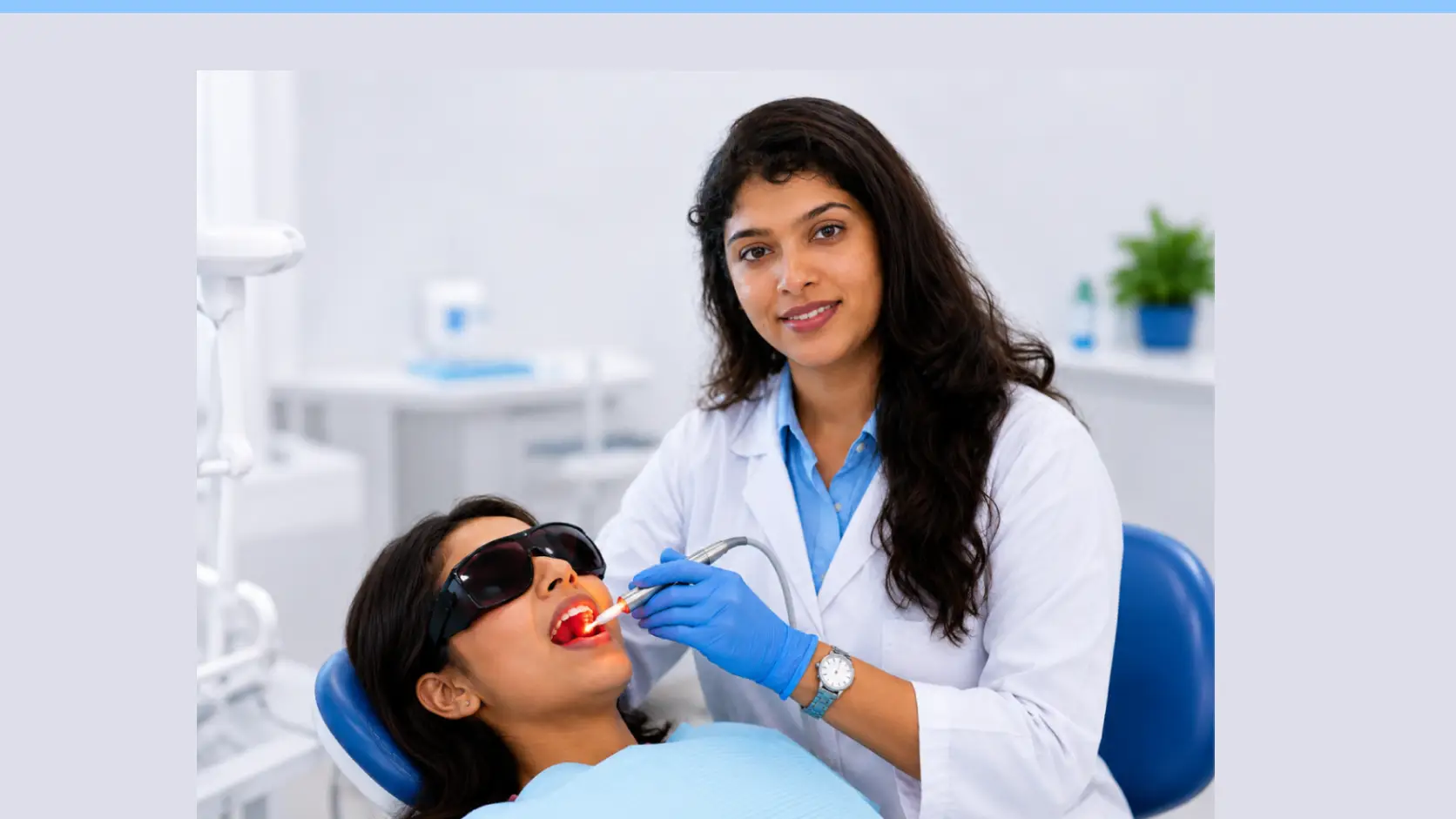
Laser Dental Procedures
Precision Dentistry with Modern Laser Technology
Modern dentistry continues to evolve with technologies designed to make dental treatment more precise and comfortable.
At Dental Park – Kids, Laser, and Dental Implant Center, dental laser technology may be used for selected procedures involving the gums and other oral tissues. Depending on the treatment required, lasers can help dentists work precisely within a targeted area while supporting effective tissue management.
Every patient’s dental condition is different. Before recommending a laser procedure, our dental team evaluates your oral health and determines whether laser-assisted treatment or a conventional technique is more appropriate.
What Is Laser Dentistry?
Laser dentistry is the use of focused light energy during selected dental procedures.
Different dental lasers operate at different wavelengths and interact with oral tissues in different ways. The appropriate laser and settings depend on the tissue being treated and the objective of the procedure.
Dental lasers may be used as the primary instrument for certain procedures or as an additional tool alongside conventional dental treatment.
What Dental Procedures Can Be Performed with Lasers?
Depending on the patient’s condition, treatment requirements and laser technology available, dental lasers may be used in several areas of dentistry.
These can include:
- Gum contouring
- Gingivectomy
- Gingivoplasty
- Frenectomy
- Management of selected soft-tissue lesions
- Exposure of selected unerupted teeth
- Crown lengthening procedures
- Periodontal treatment
- Soft-tissue management around restorations
- Implant-related soft-tissue procedures
- Selected root canal applications
- Selected oral surgical procedures
- Laser-assisted teeth whitening
Your dentist will determine whether laser treatment is appropriate for your particular dental condition.
Laser Gum Treatment
Gum disease can cause inflammation, bleeding, periodontal pockets and damage to the tissues supporting the teeth.
Depending on the condition, laser technology may be used as part of periodontal treatment to assist with the management of selected diseased or inflamed soft tissue.
Laser treatment does not replace proper diagnosis, professional cleaning or other periodontal procedures when those treatments are required.
A detailed gum assessment is necessary to determine the appropriate treatment.
Laser Gum Contouring
The shape and position of the gums can significantly influence the appearance of a smile.
Some people naturally have more gum tissue visible when smiling, while others may have an uneven gum line.
Laser gum contouring can be used in selected cases to reshape excess gum tissue and create a more balanced relationship between the teeth and gums.
This procedure may also form part of a comprehensive smile makeover when appropriate.
Laser Gingivectomy
A gingivectomy involves removing selected excess or diseased gum tissue.
Dental lasers may be used for gingivectomy procedures because they allow the dentist to work precisely within the treatment area.
The procedure may be recommended for periodontal, restorative or cosmetic reasons depending on the patient’s dental condition.
Laser Gingivoplasty
Gingivoplasty involves reshaping gum tissue to improve its form or contour.
Laser technology may be used to carefully reshape selected areas of the gums.
This procedure can sometimes be performed alongside other periodontal, restorative or cosmetic dental treatments.
Laser Frenectomy
A frenum is a small fold of tissue connecting different parts of the mouth.
When a frenum causes functional or dental concerns, a frenectomy may be recommended to release or modify the tissue.
Dental lasers can be used for selected frenectomy procedures.
In children, teenagers or adults, the need for treatment should always be determined after an appropriate clinical assessment.
Laser Treatment for Children’s Dentistry
Dental lasers can also have applications in pediatric dentistry.
Depending on the child’s condition and the procedure required, laser technology may be considered for selected soft-tissue treatments.
Every child requires an individual assessment before treatment. Our priority is to choose an approach appropriate for the child’s dental condition, age and comfort.
Laser Crown Lengthening
Crown lengthening is a dental procedure used to expose more of the tooth structure.
It may be recommended for restorative or cosmetic reasons.
For example, additional tooth structure may need to be exposed before placing certain restorations, or gum tissue may be reshaped to improve the appearance of the smile.
Laser technology can be used for selected soft-tissue crown-lengthening procedures.
Laser-Assisted Periodontal Treatment
Periodontal disease affects the gums and supporting structures around the teeth.
Depending on the severity and type of periodontal condition, laser technology may be used as an adjunct to selected periodontal procedures.
The objective of periodontal treatment is to control disease, manage infected or inflamed tissues and help maintain the structures supporting the teeth.
Laser treatment is only one possible component of periodontal care and may not be required for every patient.
Laser-Assisted Root Canal Procedures
Root canal treatment is performed when the pulp inside a tooth becomes infected or significantly damaged.
Certain dental laser technologies may be used as an additional tool during selected endodontic procedures.
However, laser treatment does not automatically replace conventional root canal cleaning, shaping and sealing techniques.
Your dentist will determine whether laser assistance provides an appropriate benefit for your particular case.
Laser Treatment Around Dental Implants
Healthy gum tissue around dental implants is important for maintaining long-term oral health.
In selected situations, lasers may be used for soft-tissue management around implants or to assist with implant exposure and related procedures.
The appropriate treatment depends on the condition of the implant, surrounding bone and gum tissues.
Laser Treatment for Soft-Tissue Growths
Certain benign soft-tissue growths or excess oral tissues may require evaluation and removal.
Depending on the type, location and clinical diagnosis, a dental laser may be suitable for selected soft-tissue procedures.
Any unusual lump, growth, ulcer or oral lesion should first be professionally evaluated before treatment is recommended.
Laser-Assisted Teeth Whitening
Certain professional teeth-whitening systems use light or laser technology as part of the whitening procedure.
The objective is to improve the appearance of stained or discoloured teeth.
Not every type of tooth discoloration responds in the same way to whitening, so your teeth and gums should be evaluated before treatment.
What Are the Benefits of Laser Dentistry?
When clinically appropriate and used by trained dental professionals, laser technology can offer several potential advantages.
Precise Treatment
Laser energy can be directed toward a targeted treatment area, allowing precise management of selected oral tissues.
Tissue Management
Certain lasers can cut or reshape soft tissue while assisting with control of bleeding during the procedure.
Minimally Invasive Approach
For selected procedures, laser technology can provide an alternative or adjunct to conventional surgical instruments.
Patient Comfort
Some patients may find selected laser-assisted procedures comfortable compared with conventional approaches.
The experience varies depending on the procedure and individual patient.
Support for Healing
Careful tissue management and appropriate treatment technique can support the healing process following selected laser procedures.
Is Laser Dentistry Painful?
Patient experience varies depending on the procedure being performed.
Some laser procedures may cause relatively little discomfort, while other treatments may still require local anaesthesia.
It would be inaccurate to say that every laser dental procedure is completely painless.
Your dentist will explain what to expect and whether anaesthesia is required before treatment begins.
Is Laser Dentistry Safe?
Dental lasers are specialized medical devices and should be operated by appropriately trained dental professionals using the correct wavelength, power settings and safety protocols.
Protective eyewear and other safety measures may be required during laser procedures.
Before treatment, your dentist will evaluate your dental condition and determine whether laser treatment is appropriate.
Laser Dentistry vs Conventional Dentistry
Laser treatment does not replace every traditional dental technique.
Conventional instruments remain appropriate and necessary for many dental procedures.
In some situations, a dental laser can be used instead of a conventional instrument, while in others it may be used alongside conventional treatment.
The appropriate technique depends on the procedure, tissue being treated, available technology and individual clinical condition.
What Happens During a Laser Dental Procedure?
1. Dental Consultation
Your dentist first examines the affected tooth, gums or oral tissues and discusses your symptoms and concerns.
2. Diagnosis
Clinical examination and, when necessary, diagnostic imaging or other tests help determine the underlying condition.
3. Treatment Planning
Your dentist determines whether laser treatment is suitable and explains available alternatives.
4. Laser Procedure
The appropriate dental laser and settings are selected according to the tissue and procedure being performed.
Necessary protective measures are used during treatment.
5. Aftercare
After treatment, you will receive instructions appropriate to your procedure.
Frequently Asked Questions
A dental laser is a device that produces concentrated light energy that can interact with oral tissues. Different wavelengths are used for different dental applications.
Yes. Dental lasers can be used for selected gum procedures, including tissue contouring, gingivectomy, gingivoplasty and certain periodontal applications.
Whether laser treatment is appropriate depends on the individual gum condition.
Not for every procedure.
Some laser systems have applications involving dental hard tissues, but conventional dental instruments may still be required depending on the treatment.
Add the answeLaser technology may be suitable for selected pediatric dental procedures.
A dentist must first evaluate the child’s condition and determine whether laser treatment is appropriate.r here.
No dental treatment should be described as completely painless for every patient.
Comfort depends on the procedure, the tissue being treated and individual sensitivity. Some laser procedures may still require local anaesthesia.
Certain dental lasers can assist with controlling bleeding during soft-tissue procedures.
However, the amount of bleeding varies according to the procedure and individual clinical situation.
Treatment time depends entirely on the procedure being performed.
A small soft-tissue procedure may be relatively quick, while more extensive periodontal, restorative or surgical treatment may require additional time or appointments.
You do not need to decide whether a laser should be used before visiting the dentist.
The dentist first diagnoses your dental condition and then determines whether laser-assisted treatment or another technique is most appropriate.
Why Choose Dental Park for Laser Dental Procedures?
At Dental Park – Kids, Laser, and Dental Implant Center, technology is used to support careful diagnosis and personalized dental treatment.
Our approach to laser dentistry focuses on:
- Individual dental assessment
- Appropriate selection of laser procedures
- Precision-focused treatment
- Modern dental technology
- Soft-tissue and periodontal applications
- Laser options for selected pediatric procedures
- Clear explanation of treatment alternatives
- Patient comfort and safety
- Follow-up and oral health maintenance
Laser technology is not automatically the right solution for every dental problem. Our goal is to recommend it when it provides an appropriate clinical option for your individual condition.
Discover Whether Laser Dentistry Is Right for You
If you have concerns involving your gums, soft tissues, periodontal health or another dental condition that may benefit from laser-assisted treatment, schedule a consultation at Dental Park – Kids, Laser, and Dental Implant Center.
Our dental team can examine your condition, explain your treatment options and determine whether a laser dental procedure is appropriate for you.