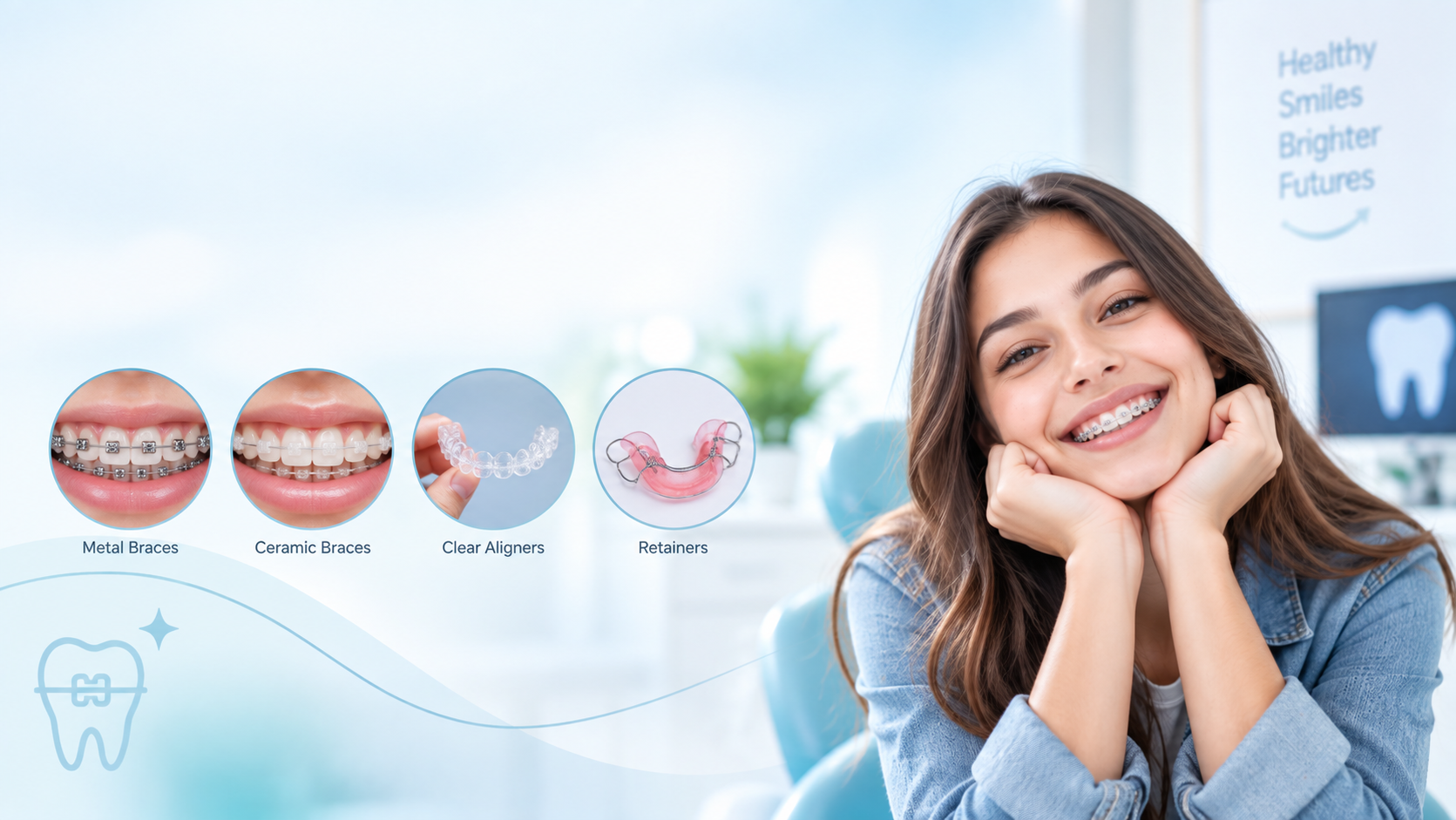
Straighter Teeth, Healthier Bites and More Confident Smiles
Orthodontic treatment is about more than creating straight teeth. Proper alignment of the teeth and jaws can improve your bite, make oral hygiene easier and contribute to long-term dental health.
At Dental Park – Kids, Laser, and Dental Implant Center, we provide personalized orthodontic treatment for children, teenagers and adults. Depending on your dental needs, treatment may include traditional braces, ceramic braces, clear aligners, orthodontic appliances, retainers or early orthodontic intervention.
Every smile develops differently. Our approach begins with a detailed assessment of your teeth, jaws and bite so that treatment can be planned according to your individual needs.
What Is Orthodontic Treatment?
Orthodontic treatment is a branch of dentistry focused on correcting the position of teeth and jaws.
It can be used to treat crooked teeth, crowded teeth, gaps between teeth and different types of bite problems.
Orthodontic treatment works by applying carefully controlled forces to gradually move teeth toward their planned positions. In growing children, certain orthodontic appliances may also be used to help manage developing jaw and bite problems.
What Problems Can Orthodontic Treatment Correct?
Orthodontic treatment may be recommended for:
- Crooked or misaligned teeth
- Crowded teeth
- Gaps between teeth
- Protruding teeth
- Overbite
- Underbite
- Crossbite
- Open bite
- Uneven dental alignment
- Certain jaw-development concerns
- Difficulty maintaining oral hygiene because of crowded teeth
The appropriate treatment depends on the type and severity of the orthodontic problem.
A clinical examination and appropriate diagnostic assessment are necessary before recommending treatment.
Orthodontic Treatment for Children
Children’s teeth and jaws change significantly as they grow. Monitoring dental development during childhood can help identify orthodontic concerns at an early stage.
Some children may benefit from treatment while their jaws are still developing, while others may simply need regular monitoring until more permanent teeth have erupted.
Early evaluation does not necessarily mean that your child will need braces immediately.
Instead, it allows the dentist to monitor tooth eruption, jaw development, available space and bite relationships and determine the appropriate time for treatment.
Why Is Early Orthodontic Evaluation Important?
Certain orthodontic problems become easier to identify as permanent teeth begin to erupt.
An early orthodontic assessment may help detect:
- Severe crowding
- Crossbite
- Protruding front teeth
- Abnormal bite development
- Jaw growth discrepancies
- Early or delayed loss of baby teeth
- Permanent teeth erupting in unusual positions
- Space problems for developing permanent teeth
- Oral habits affecting tooth or jaw development
When appropriate, early intervention may help manage a developing problem before comprehensive orthodontic treatment is considered later.
What Is Early or Interceptive Orthodontic Treatment?
Early orthodontic treatment, sometimes called interceptive orthodontics, is treatment performed while a child’s teeth and jaws are still developing.
The objective is to address selected developing orthodontic problems at an appropriate stage of growth.
Depending on the child’s needs, treatment may involve orthodontic appliances, space management, limited braces or other measures designed to manage tooth eruption and jaw development.
Not every child requires early orthodontic treatment. The decision depends on the child’s individual dental development and orthodontic condition.
What Are Dental Braces?
Dental braces are orthodontic appliances used to gradually move teeth into improved positions.
Traditional braces consist of brackets attached to the teeth and connected by an orthodontic wire. Controlled pressure from the orthodontic system gradually guides the teeth according to the treatment plan.
Braces can be used to treat many orthodontic conditions, ranging from relatively simple alignment problems to more complex bite concerns.
Types of Braces and Orthodontic Treatment
Different orthodontic systems may be appropriate depending on your age, dental condition, treatment requirements and preferences.
Traditional Metal Braces
Metal braces remain one of the most widely used orthodontic treatments.
Brackets are attached to the teeth and connected with orthodontic wires. During follow-up appointments, the orthodontic system is adjusted to progressively move the teeth.
Metal braces can be used for children, teenagers and adults and may be suitable for a wide range of orthodontic conditions.
Ceramic Braces
Ceramic braces work in a similar way to conventional braces but use tooth-coloured or clear brackets that are less noticeable.
They may be considered by patients who want fixed orthodontic treatment with a more discreet appearance.
Clear Aligners
Clear aligners use a planned series of transparent, removable trays to gradually reposition teeth.
Because the trays are removable, patients can take them out while eating and while brushing and flossing their teeth.
Clear aligners can be suitable for many teenagers and adults, although their suitability depends on the type and complexity of the orthodontic problem.
What Are Orthodontic Appliances?
Orthodontic appliances may be recommended for certain tooth, bite or jaw-development concerns.
Depending on the treatment plan, appliances can be either fixed or removable.
Fixed appliances remain in the mouth during treatment, while removable appliances can be taken out according to the dentist’s instructions.
For growing children, selected appliances may be used to help manage space, tooth eruption or developing jaw relationships.
The type of appliance recommended depends entirely on the individual orthodontic condition.
What Is a Retainer?
A retainer is an orthodontic appliance used after active tooth movement has been completed.
Once braces or clear aligner treatment has moved your teeth into their planned positions, the surrounding bone and tissues require time to adapt.
Retainers help maintain the corrected tooth positions and reduce the tendency for teeth to move back toward their previous alignment.
Retainers may be fixed or removable. Your dentist will explain which type is appropriate and how frequently it should be worn.
Braces or Clear Aligners – Which Is Better?
Neither option is automatically better for every patient.
Traditional braces provide continuous orthodontic forces and can be suitable for a broad range of alignment and bite problems.
Clear aligners provide a more discreet and removable alternative and may be suitable for selected orthodontic conditions.
The choice depends on factors such as:
- Complexity of tooth movement
- Type of bite problem
- Age
- Oral health
- Lifestyle
- Treatment goals
- Ability to follow treatment instructions
After examining your teeth and bite, your dental team can explain which orthodontic options may be appropriate for you.
What Happens During Orthodontic Treatment?
Orthodontic treatment generally follows several stages.
1. Initial Consultation
Your teeth, gums, bite and jaw relationship are examined and your concerns and treatment goals are discussed.
2. Diagnostic Assessment
Depending on your condition, photographs, digital scans, X-rays or other diagnostic records may be recommended.
These records help assess tooth position, jaw relationships and treatment requirements.
3. Personalized Treatment Plan
A treatment plan is developed based on your orthodontic condition.
Your dentist will discuss the recommended treatment, available alternatives and expected treatment process before treatment begins.
4. Active Orthodontic Treatment
Braces, aligners or another orthodontic appliance are used according to the treatment plan.
Regular appointments allow your progress to be monitored.
5. Retention
After active orthodontic treatment is completed, retainers may be recommended to help maintain the corrected tooth positions.
How Long Does Orthodontic Treatment Take?
There is no single treatment duration that applies to everyone.
Orthodontic treatment time depends on factors including:
- Severity of misalignment
- Type of bite problem
- Amount of tooth movement required
- Patient’s age and dental development
- Type of orthodontic appliance
- Individual biological response
- Attendance at follow-up appointments
- Following treatment instructions
Minor alignment concerns may require less treatment time than complex orthodontic conditions.
A more accurate estimate can be provided after your orthodontic assessment and treatment planning.
Is Orthodontic Treatment Painful?
Orthodontic treatment should not cause continuous severe pain.
However, some patients experience temporary pressure, tenderness or mild discomfort after braces are fitted, adjusted or when starting a new set of clear aligners.
This usually occurs because the teeth are responding to orthodontic forces.
If significant or persistent discomfort occurs, contact your dental team for evaluation.
Can Adults Have Orthodontic Treatment?
Yes. Orthodontic treatment is not limited to children and teenagers.
Many adults choose orthodontic treatment to correct crowded teeth, gaps, misalignment or bite problems.
Depending on the condition of your teeth, gums and supporting bone, treatment options may include traditional braces, ceramic braces or clear aligners.
A dental evaluation is important before beginning treatment because healthy teeth and gums provide the foundation for successful orthodontic care.
How Do I Care for My Teeth During Braces Treatment?
Maintaining excellent oral hygiene is especially important during orthodontic treatment.
Brackets and wires can create additional areas where plaque and food particles accumulate.
Patients undergoing orthodontic treatment should:
- Brush carefully around brackets and wires
- Clean between the teeth every day
- Follow instructions for cleaning orthodontic appliances
- Limit foods that may damage braces
- Attend scheduled orthodontic appointments
- Continue routine dental check-ups
- Contact the clinic if an appliance becomes loose or damaged
Good oral hygiene helps protect your teeth and gums throughout orthodontic treatment.
Frequently Asked Questions About Orthodontic Treatment
At what age should a child have an orthodontic evaluation?
Children can be evaluated while their teeth and jaws are developing. The appropriate timing depends on tooth eruption, jaw development and whether there are visible concerns with the bite or alignment.
An evaluation does not necessarily mean treatment will begin immediately.
Does every child with crooked teeth need braces?
No. The need for braces depends on the child’s tooth alignment, available space, bite, jaw development and overall dental condition.
Some children simply require monitoring as their permanent teeth develop.
Can braces correct an overbite or underbite?
Orthodontic treatment can be used to manage many types of bite problems, including overbite, underbite, crossbite and open bite.
The appropriate treatment depends on the cause and severity of the bite problem and, in children, the stage of jaw development.
Are clear aligners suitable for teenagers?
Clear aligners may be appropriate for some teenagers.
Suitability depends on the orthodontic problem and the patient’s ability to wear the aligners consistently according to instructions.
Do I need a retainer after braces?
Retention is an important part of orthodontic treatment.
After teeth have been moved, retainers are commonly used to help maintain their new positions. The type of retainer and wearing schedule depend on the individual treatment plan.
Can teeth move again after orthodontic treatment?
Teeth can change position over time. Wearing retainers according to your dentist’s instructions helps maintain the alignment achieved during treatment.
Why Choose Dental Park for Orthodontic Treatment?
At Dental Park – Kids, Laser, and Dental Implant Center, orthodontic treatment begins with understanding your individual dental needs.
Our approach focuses on:
- Detailed dental and bite assessment
- Personalized orthodontic treatment planning
- Orthodontic options for children, teenagers and adults
- Monitoring of developing teeth and jaws
- Modern diagnostic and treatment techniques
- Clear communication throughout treatment
- Long-term maintenance of treatment results
Whether you are considering braces for your child, exploring clear aligners or looking to improve your own smile, our team can assess your condition and explain the available treatment options.
Start Your Journey Towards a Straighter, Healthier Smile
Properly aligned teeth can improve the appearance of your smile while also supporting better oral hygiene and bite function.
If you are concerned about crooked teeth, crowding, gaps, your child’s developing bite or another orthodontic problem, schedule an orthodontic consultation at Dental Park – Kids, Laser, and Dental Implant Center.
Our team will evaluate your teeth and bite, discuss your treatment goals and help you understand which orthodontic options may be suitable for you or your child.